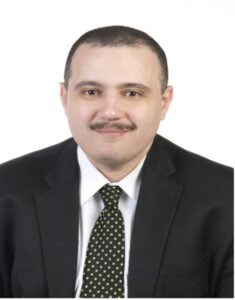
Prof. Ayman EL-Refaie, Ph.D., FIEEE, FIET, FNAI
President 2025-2026, Industry Applications Society (IAS)
Thomas and Suzanne M. Werner Endowed Chair
Professor of Electrical Engineering
Marquette University, USA
Opus College of Engineering, Dept. of Electrical and Computer Engineering
Energy Conversion for a Sustainable Future: Revived Role of Power and Energy
Ayman M. El-Refaie received his M.S. and Ph.D. degrees in electrical engineering from the University of Wisconsin Madison in 2002, and 2005 respectively. Between 2005 and 2016, he has been a principal engineer and a project leader at the Electrical Machines and Drives Lab at General Electric Global Research Center. His interests include electrical machines and drives. Since January 2017, he joined Marquette University as the Werner Endowed Chair for Energy Sustainability.
He has over 250 journal and conference publications. He has issued 50 US patents. He is a fellow of the IEEE, IET and National Academy of Inventors.
At GE, he worked on several projects that involve the development of advanced electrical machines for various applications including aerospace, traction, wind, and water desalination. He was the chair for the IEEE IAS Transportation Systems committee and an associate editor for the Electric Machines committee. He was a technical program chair for the IEEE 2011 Energy Conversion Conference and Exposition (ECCE). He was the general chair for ECCE 2014 and 2015 ECCE steering committee chair. He was the general chair of IEMDC 2019. He was the IEEE IAS Industrial Power Conversion Systems Department. He was the IAS Publications Department Chair He is currently serving as the IAS president. He is a member of Sigma Xi. He received several prestigious awards including the IEEE IAS Industrial Power Conversion Systems Department Gerald Kliman Innovator Award, the 2022 ICEM Arthur Ellison Achievement Award, the 2024 IEEE Power & Energy Society (PES) Cyril Veinott Electromechanical Energy Conversion Award, and the 2024 IEEE PELS Electrical Machines, Drives and Related Automation Technical Achievement Award among several others. He is the recipient of five paper awards.
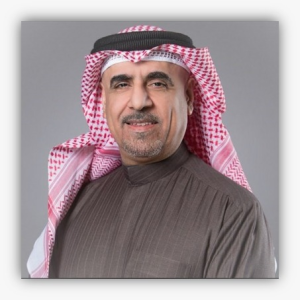
Ahmed Saleh AlBalooshi
Managing Director, Consultant, & Instructor Fintech ICT Consultations
Artificial Intelligence Reshapes the Future of Education
Ahmed Saleh Albalooshi is a seasoned executive and thought leader in Information Technology with over 35 years of experience in management. He has held key leadership positions in major organizations such as Gulf Air, SABRE, EDS, and Bahrain Islamic Bank. Currently, he is the Managing Director of Fintech IT Consultations, specializing in driving innovation through Fourth Industrial Revolution technologies, including Artificial Intelligence, Machine Learning, Big Data, Blockchain, and many other advanced techs. He holds a Bachelor's degree in Computer Science (CS) and is a certified expert in AI, Data Science, Blockchain, Advanced Networking & Data Security, NFTs, and Metaverse. He also plays a pivotal role as a financial analyst with deep insights into stock markets and cryptocurrencies. He is a sought-after trainer, lecturer, and public speaker who regularly facilitates discussions at international conferences related to cutting-edge technologies. He is a member of the International Group of Artificial Intelligence Group (IGOAI) and a charter member of the Bahraini IT Professionals Toastmasters Club (BITP). Additionally, he holds memberships in prominent international Fintech organizations such as Faster Community, Islamic FIN, and Fintech CEO. Ahmed's leadership and contributions to the ICT industry have earned him multiple accolades, including three CIO 200 awards, recognizing him as one of the top ICT leaders in the Middle East.
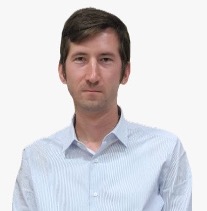
Dr. Ilia Sholin
Intelligent Stream of Technology & Open Knowledge (ISTOK LLC), Russia
Hydrogen Energy: Technologies, Strategies, and Current Challenges
Dr Ilia Sholin is a physicist specializing in high-pressure physics and science education. He obtained his PhD from the Osipyan Institute of Solid-State Physics (ISSP RAS) of the Russian Academy of Sciences in 2020, where he investigated the thermodynamic properties of metal hydrides under extreme conditions. He also holds a Specialist Degree in Physics and an additional degree in Education from Lomonosov Moscow State University. Dr Sholin began his research career at the ISSP RAS, gradually moving from a Laboratory Assistant to Deputy Head of Laboratory. During his time there, he was involved in a range of research projects, in instance Phase Equilibria and Supercritical Anomalies in Metal–Hydrogen and Metal–Deuterium Systems. In parallel, he held a position as Senior Lecturer at Lomonosov Moscow State University, where he taught undergraduate courses such as Electricity and Magnetism, Electrodynamics, and Continuum Electrodynamics. He also led laboratory courses in general physics and supervised 16 undergraduate and graduate students. He is actively involved in the IEEE community, serving as Vice-Chair of the Industry Applications Society Bahrain Chapter.

Professor Sylvester Arnab, PhD
Centre for Postdigital Cultures (CPC), Institute for Creative Cultures,
Coventry University
United Kingdom
Professor Arnab S. is an award-winning academic and innovator in game-based learning and digital education. He has received international recognition, including the QS Reimagine Education Awards and Gamification Awards for his pioneering projects. Arnab serves as Associate Editor for the Simulation and Gaming Journal and sits on advisory boards for major EU projects. He supervises PhD research in AI-supported virtual reality, game-based learning, and digital well-being, and acts as an external reviewer for universities and research funding bodies worldwide. He has examined PhDs at leading institutions across Europe, Asia, and Australia, and regularly delivers keynotes on educational innovation and gamification. Arnab has contributed to research audits and curriculum reviews and has successfully supervised PhD projects on topics ranging from virtual reality for well-being in space to gamified museum experiences. His work continues to shape the future of digital education and immersive learning globally.
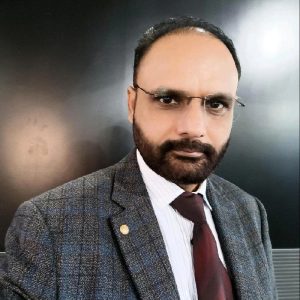
Dr. Shahbaz Pervez Chattha
Programme Chair, Applied Information Technology, Whitecliffe, New zealand
Bridging the Gap: How Spatial AI is Forging the Future of Healthcare, Cybersecurity, and Digital Transformation.
Professor Dr. Shahbaz Pervez Chattha is a globally recognized AI & Cybersecurity leader whose 25-year career exemplifies excellence at the intersection of academia and industry. As Programme Chair and Distinguished Faculty Member at Whitecliffe New Zealand, he has pioneered innovative approaches to AI & cybersecurity education while maintaining active engagement with industry challenges. Professor Chattha stands at the nexus of advanced cybersecurity practice, academic leadership, and global community advocacy. His career is dedicated to a singular vision: fortifying the global digital landscape through robust security frameworks, the ethical adoption of AI, and the relentless empowerment of people.
Professor Chattha’s expertise is validated by an exceptional portfolio of 20+ elite certifications from leading organizations including ISO 27001 & ISO 42001 Lead Auditor, Cisco (CCIE Security), ISACA (CISM), EC-Council (CEH), Sun Micro Systems (SCJP), Microsoft Inc (MCP), and CompTIA (Security+). His rare distinction as both a Cisco Certified Master Trainer and one of New Zealand’s select EC-Council certified instructors underscores his commitment to developing cybersecurity talent. These professional achievements are complemented by his standing as a Senior Member IEEE, a registered engineer with the Pakistan Engineering Council, member of the Institute of Engineering and Technology (UK), Chartered Member and Board Member of wellington Branch of ITP New Zealand.
The presentation will follow this arc to build a comprehensive vision:
1. The Problem: I will begin by outlining the pressing challenges we face: the widening skills gap in critical sectors, the inability of traditional training methods to keep pace with complexity, and the escalating sophistication of cyber threats, especially within the digital healthcare ecosystem.
2. The Solution: Introducing Spatial AI as a Paradigm Shift. I will then introduce Spatial AI not merely as a new tool, but as a fundamental shift. I will explain how it merges the physical and digital worlds to create intuitive, immersive, and intelligent learning and operational environments.
3. The Platform: A Glimpse into the XR Ecosystem. To ground this concept, I will briefly demonstrate the capabilities of platforms like EON Reality’s XR ecosystem, showing how such systems are already being used to create scalable, realistic, and risk-free training simulations.
4. The Application: This is where the theory becomes practice. I will showcase specific, high-impact applications:
o Medical: From immersive surgical navigation and interactive 3D anatomy to personalized patient rehabilitation.
o Cybersecurity: Using virtual “cyber ranges” to train professionals in hyper-realistic attack scenarios, building muscle memory for incident response.
o Digital Transformation: Illustrating how Spatial AI is revolutionizing design, maintenance, and collaboration across industries.
5. The Future & Call to Action: I will conclude with a vision for the next decade, painting a picture of a world where experiential, AI-powered learning is the standard. The talk will end with a clear call to action, outlining the tangible steps institutions can take to begin this transformative journey.
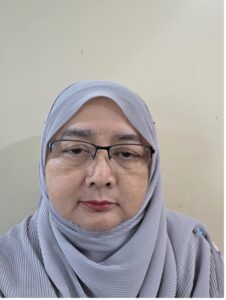 Prof. Dr. Rahmita Wirza O.K. Rahmat
Professor in Computer Graphics from the Faculty of Computer Science and Information Technology, Universiti Putra Malaysia
AI-Driven Multimodal Cardiac Imaging for Precision Cardiology Across Echocardiography, Angiography, and CTA
Cardiovascular disease remains the leading global cause of mortality, and cardiac imaging has traditionally been interpreted in a modality-specific, clinician-dependent manner. Over the past decade, prior work has demonstrated the value of artificial intelligence in single-modality cardiac imaging, including deep learning-based segmentation and functional analysis in echocardiography, coronary assessment in angiography, and anatomical reconstruction from cardiac CT. While these advances have improved efficiency and accuracy, clinical insight remains limited by fragmented interpretation across modalities.
This keynote examines how next-generation artificial intelligence (AI) is reshaping cardiac imaging from isolated modality-based interpretation into a multimodal, integrated foundation for precision cardiology. The talk highlights recent advances in deep learning, multimodal data fusion, and explainable AI that enable automated image analysis, functional assessment, and clinically meaningful decision support across imaging modalities. Emphasis is placed on clinical trust, interpretability, and workflow integration, demonstrating how AI can augment cardiologists rather than replace them, and support earlier diagnosis and personalised treatment strategies.
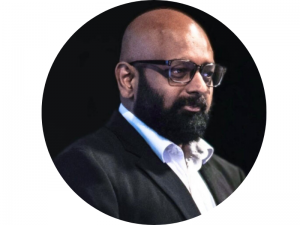
Prof. Dr Selvakumar Manickam
Director
Cybersecurity Research Centre (CYRES)
Universiti Sains Malaysia Malaysia
Defending the Digital Frontier: AI at the Frontlines of Cybersecurity
Dr. Selvakumar Manickam is a leading authority in cybersecurity and AI. As a professor and director of the Cybersecurity Research Center, he advances research in security, privacy, intelligent systems, and cyber-physical systems. His work focuses on bridging theory and practice by integrating AI with cybersecurity to address complex digital and physical threats.
With decades of software development experience, he leads projects in AI-driven automation and secure cyber-physical systems that improve efficiency and safety across sectors such as energy, manufacturing and agriculture sectors. A prolific researcher, he publishes in top journals, speaks at major conferences, and mentors the next generation of experts in AI and cybersecurity. His insights are widely sought by industry and media, establishing him as a thought leader shaping the future of these fields.